Three minutes, two brands, and a statue
The 2014 films leaned on a mythologised version of the players, up to and including a bronze of one of them, and the register shifted with it.
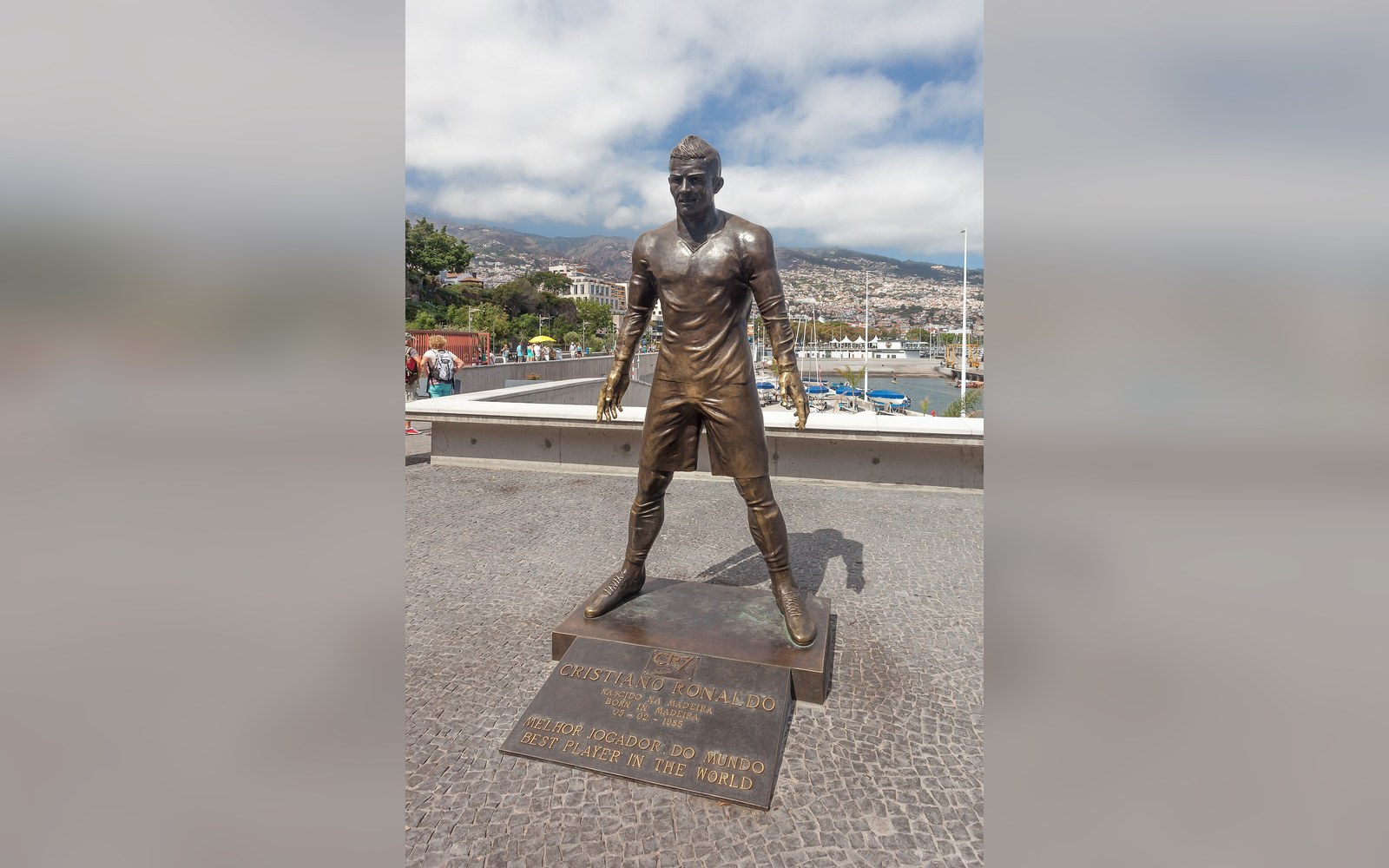
The campaigns that turned 2014's players into monuments
The Brazil cycle was always going to be different. A World Cup returning to South America for the first time since 1978, staged in the country that had invented the mythological version of football itself, handed brands a ready-made register: not grit and mud and northern-European endeavour, but something closer to worship. The advertising followed. By the time the tournament kicked off in São Paulo in June 2014, the films running on screens worldwide had settled on a consistent tone — players not as athletes but as icons, as bronze and marble, as forces of nature operating beyond the reach of ordinary criticism. It was a shift you could measure in the formal choices: longer cuts, slower tempos, the studied absence of comedy, and, in one case, a literal sculpture.
Nike and the three-minute question
Nike's centrepiece for 2014 was The Last Game, an animated film that ran to just over three minutes in its full version. The choice of animation was partly logistical — gathering Cristiano Ronaldo, Wayne Rooney, Neymar and a half-dozen other first-choice players in a single location for long enough to shoot live action was close to impossible inside a tournament window — but it also allowed a tone that live action struggles to hold. When everything is drawn, nothing needs explaining. The physics can be wrong in useful ways; the world can be saturated into myth without a director having to argue a real human face into matching it. Wieden+Kennedy Portland handled the campaign, as they had handled Nike's football work through most of the preceding decade, and the three-minute version was designed to live online while a compressed sixty-second cut ran in broadcast slots.
The narrative was a fable in the purest sense: clones of the world's best players, produced by a corporation with a philosophy of safe, risk-free football, are defeated when the originals emerge from retirement to play one last time. The moral was not subtle — genius is irreducible and cannot be manufactured — and it mapped cleanly onto Nike's consistent World Cup argument since at least 2002, that individual expression defeats organised caution. What was new in 2014 was the length and the willingness to spend that length on atmosphere rather than incident. There were stretches of The Last Game where nothing happened except a long look at a rendered face.
That choice cost money. Producing high-quality CGI featuring recognisable versions of named athletes requires individual likeness agreements, and the process of making a football behave correctly in rendered space is not easier than it is on a real pitch — the physics still have to convince. The film was made by Wieden+Kennedy together with the animation studio Passion Pictures, lending it a characteristic warmth that sat in some tension with the epic framing, though Cannes Lions juries found the tension productive; the campaign collected metal at Cannes that year.
Adidas and the statue it actually built
Adidas entered 2014 as an official FIFA partner, which meant the right to use the tournament's marks and the word "Brazil" in association with the competition — a category exclusivity that Nike, as a non-partner, could not claim without carefully routing around FIFA's intellectual property framework. The Adidas campaign for 2014 was built around the idea of footballers as mythological figures, taken literally. For a sequence featuring Lionel Messi, the production built a full-scale bronze-finish statue of the player and placed it in a Buenos Aires street, filming the reactions of people who encountered it before understanding what it was. The statue was not a permanent installation; it was a prop. But the image it produced — Messi as civic monument, ordinary people moving past and around him — became the campaign's most shared visual, and the production choice demonstrated how far the 2014 register had travelled from the knockabout energy of earlier World Cup advertising.
Adidas's agency for the global campaign was TBWA\Chiat\Day, with production varying by market. The overarching campaign tag was "All In Or Nothing," a phrase designed to function across multiple sports and to anchor the brand's athlete roster — which in 2014 included not only Messi but also Gareth Bale, Robin van Persie and the Spanish national team — under a single affective frame. The phrase was deliberately operatic, and the films matched it: slow cuts, grand music, cityscapes at dusk. FIFA's tiered sponsor structure meant that Adidas could run copy that Nike could not, and they used that right aggressively, placing the tournament in the frame of the films rather than dancing around it.
The investment was considerable. Adidas had agreed a long-term partnership with FIFA ↗ that, by the 2014 tournament, made them one of a small group of top-tier partners with first-refusal category exclusivity in sporting goods. The value of that agreement ran into hundreds of millions across the full term, a figure that shaped the ambition of every brief Adidas gave its agencies in a World Cup year.
The register and where it came from
Both the Nike and Adidas approaches in 2014 shared something that would have looked strange a decade earlier: an almost complete absence of irony. The 1998 Nike airport film had put Brazil's squad in a departure lounge and let them be silly. The 2002 Secret Tournament was full of comedy and Cantona as a presiding trickster. By 2014, the mode was hagiography, and the players seemed to understand that they were being cast in a different kind of story. Ronaldo in 2014 was not playing against a goalkeeper; he was becoming a symbol. Messi was already a statue.
The shift in register tracked a shift in distribution. Films designed to travel on social platforms in 2014 — and three-minute pieces could only justify themselves on social platforms, not on broadcast slots — needed to earn their length with emotional weight, because the viewer had chosen to watch rather than been made to. A funny sixty-second film works fine when the viewer cannot skip it; a three-minute film that a viewer has chosen requires something more like awe. The silent playback constraint also pushed the design of images toward the monumental: a face in close-up, a city at night, a sculpture on a pavement read clearly without commentary. They are the grammar of myth, and in the summer of 2014, in the country where the mythology of football had been built over sixty years, they were the grammar that both major kit brands reached for simultaneously and independently.
The 2014 films were, in a sense, the genre's most self-conscious moment: advertising that knew it was making icons and leaned into the knowledge. When you put a bronze of a living man in a Buenos Aires street and film the double-takes, you are not advertising football boots. You are advertising the idea that football produces the kind of person who gets a statue.