A departure lounge, a squad, and no pitch at all
Nike's 1998 film put the Brazil squad in an airport terminal. It is remembered better than most of the football played that summer.
The film that needed no grass
The brief, as Nike and Wieden+Kennedy built it in the months before France 98, was not for a conventional football commercial. There was no match to reconstruct, no slow-motion strike to repeat across twenty takes. What they wanted was a film that felt alive — spontaneous, joyful, almost accidental — in a genre that usually looked like neither. The answer was an airport. Specifically, a set dressed to resemble a busy international terminal, populated with the Brazilian national squad, and emptied of any actual opposition.
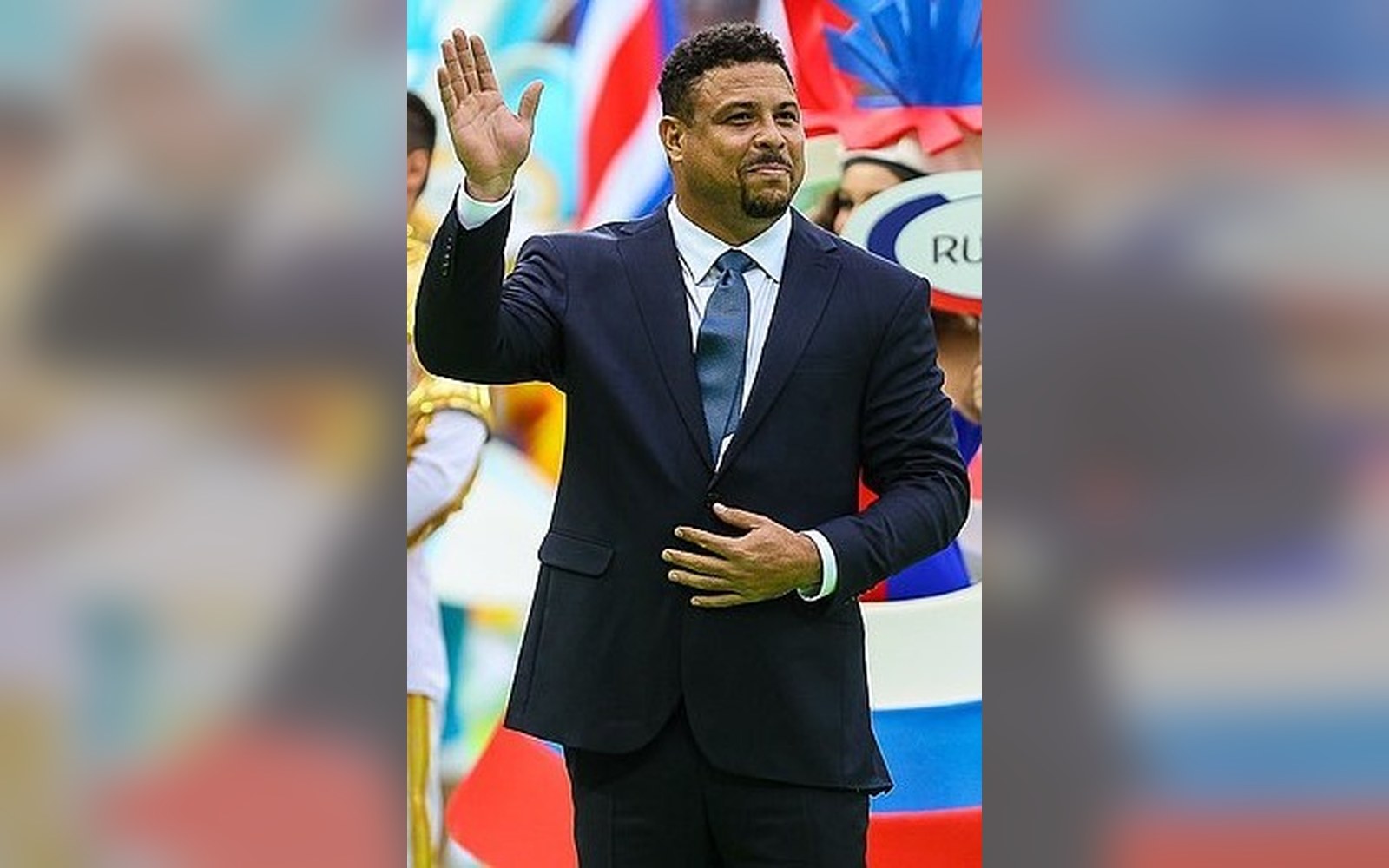
The film, released in 1998 under the title Airport and sometimes catalogued under the Nike Brazil brand, runs somewhere around two minutes in its full cut. It opens on the squad killing time between flights: players at trolleys, players stretched across seats, players with headphones on. Then, almost as a shrug, someone produces a ball. What follows is a passage of improvised-looking freestyle and small-sided play across the terminal floor — weaving between pillars, bouncing off windows, rolling under departure boards — before the whole thing escalates into a penalty shootout against the airport's automatic doors. Ronaldo Nazário, then twenty-one and already the most famous footballer on the planet, is everywhere in the film. Roberto Carlos, Denilson, Bebeto, Rivaldo and Romário all appear. The cast is close to the squad sheet for the tournament.
The film was made before the squads were announced, which imposed its own constraint. Nike held a kit contract with the Brazilian Football Confederation — the CBF deal ↗ being the engine that made the film possible at all — and the players were contracted to appear in Nike materials as part of the national team's commercial obligations. That access was finite and tightly calendared. The production had a single window, measured in days, not weeks. Getting twenty or so international footballers into the same building for anything more than a photocall required the kind of scheduling that a feature director would find uncomfortable, and it is a significant achievement that the finished film looks as unscheduled as it does.
The production logic inside the joke
The choice of an airport was not only comic. It was structural. A terminal is self-contained: hard floors, neutral light from above, long corridors that compress perspective, and surfaces that make a ball move fast and predictably. Grass is uncontrolled; a polished floor is not. The challenge of making a ball behave exactly as a shot list demands is one of the central production problems in football advertising, and Airport sidesteps it cleverly by turning erratic ball movement into the joke. When Ronaldo chips the ball over a luggage trolley and it skips back toward him off a tiled wall, no second take is required for that to read as skill.
The terminal setting also solved the sound problem in an unusual direction. Most global football films have to work entirely without sound — they are cut for silent screens in nine languages and composed so that every narrative beat lands in vision. Airport carries a great deal of sound design: the clatter of a ball on marble, tannoy announcements, the hydraulic gasp of automatic doors. But the visual gag — Brazil's squad treating an airport as a training pitch — is legible in complete silence. The requirement to work with the sound off is met not because the film was built silent-first, but because the images are self-evidently absurd on their own terms.
Wieden+Kennedy, Nike's agency of record for football throughout the 1990s, had already produced the Good vs. Evil film for Euro 96 and would build the Secret Tournament for 2002. But Airport sits apart from both of those in tone. Good vs. Evil is cinematic and Gothic. The Secret Tournament is a set-piece with rules and an emcee. Airport is the lightest of the three — closer to a home video in texture, even though it was lit, rigged and shot over a controlled schedule. The lightness was probably the brief. Nike's Brazil kit was the most commercially important football shirt in the world at that point; what the film had to communicate was that wearing it, and playing in it, was fun in a way that other football could not be.
What the film cost to make and what it bought
No production budget for Airport has entered the public record. Nike's overall marketing spend around major tournaments has historically run into the hundreds of millions of dollars globally, but individual film budgets are not disclosed. What can be measured is the commercial context. Nike was not a FIFA official partner or World Cup sponsor for France 98; Adidas held — and holds — the formal sponsorship of the tournament itself. Nike's investment was concentrated in kit contracts and standalone campaign films, which meant that the company could run a vast presence around the tournament without using the words "World Cup" or displaying the FIFA marks. Airport does not mention France 98 at all. It does not need to. The Brazil shirt, the players, and the year are sufficient.
This position — large spend, no official rights — is the architecture of ambush marketing, though Nike's version in 1998 was less provocative than later episodes would become. The company was not planting agents in stadiums or dressing fans in branded orange. It was simply making films that were more talked-about than some of the official partners' output.
The reason Airport is remembered better than most of the football played that summer is partly the quality of the film, and partly the circumstances of the tournament itself. Brazil reached the final as overwhelming favorites. Ronaldo Nazário, the Nike face at the center of Airport, played in that final in circumstances that have never been entirely explained — a late squad list revision, a reported medical episode — and France won 3–0. The story of that campaign and that final belongs to a different account. What it left behind, in commercial terms, was a film that preceded the confusion, made the best possible version of the players involved, and did so on a set that had no grass, no opposition, and no suggestion that anything could go wrong.
The airport, as a metaphor, turned out to be fairly accurate. Brazil were in transit that summer. The film catches them before they landed.