A cage, eight teams, and Cantona keeping score
Nike's Secret Tournament put three-a-side football in a ship's hold with Eric Cantona as referee, and built an entire fictional competition around it.
The idea that changed the brief
By the time the 2002 World Cup arrived — split across South Korea and Japan, with a draw that scrambled European prime time — Nike had already produced some of the genre's most-admired football films. The airport film had put Ronaldo Nazário and the Brazil squad through an improvisational kickabout in a departure terminal. The brief for 2002 needed to go somewhere else. What Wieden+Kennedy and Nike landed on was not a World Cup film at all, in the conventional sense: it was a fictional tournament, staged in a location that owed nothing to a football pitch, and refereed by a man who had not played professionally for five years.

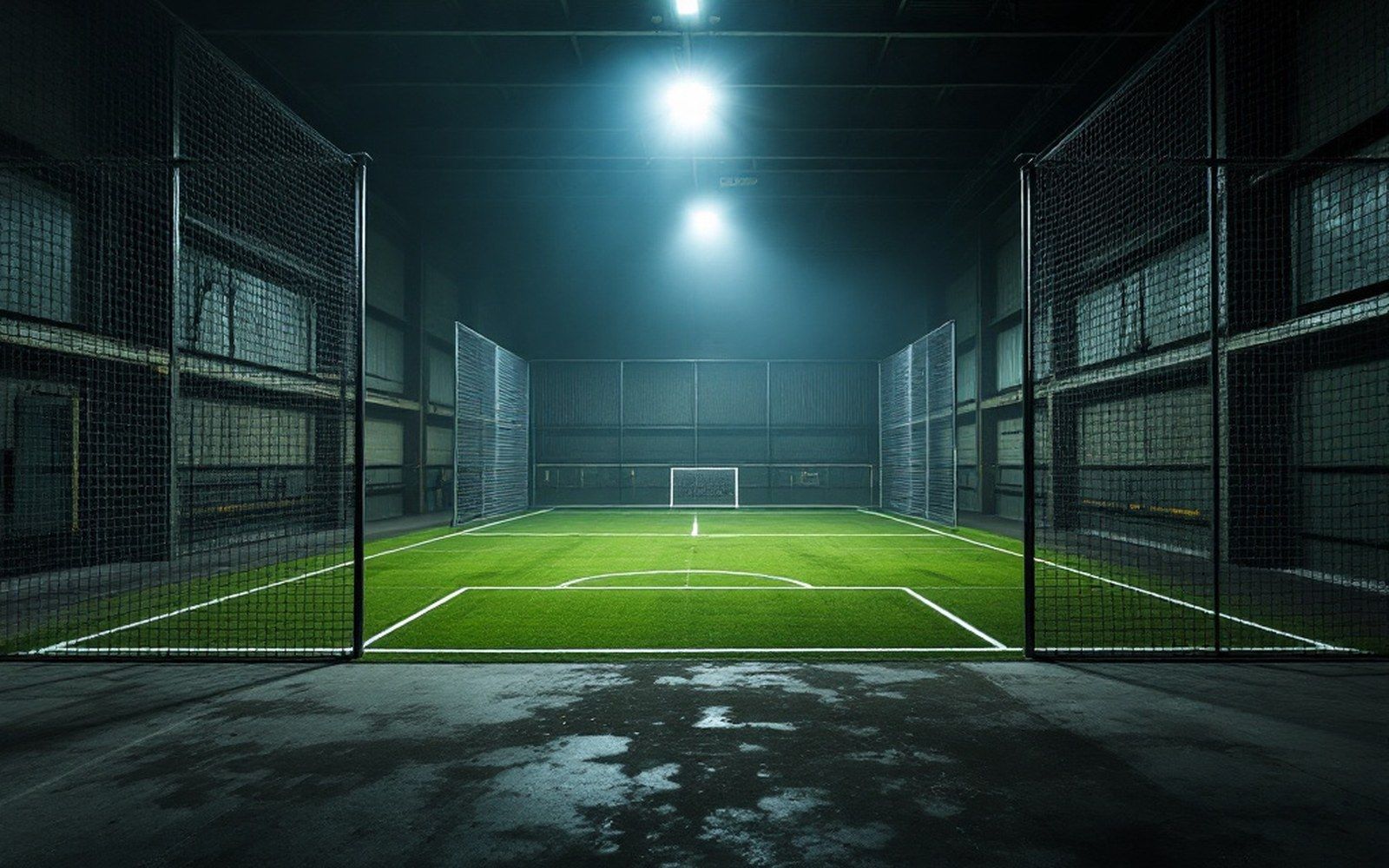
The Secret Tournament — released under the tagline Scorpion KO, named for the cage format at its centre — placed eight squads of three players inside what the film presented as the hold of a cargo ship. The conceit was simple: a man in a white suit, played by Eric Cantona, runs an illicit three-a-side competition with its own rules, its own bracket and its own prize. Nobody asks what the prize is. The atmosphere answers for it.
The structural decision that made the campaign possible was the three-a-side format itself. Players are not actors, and gathering full international squads in a single location for a conventional eleven-a-side film is a logistical fiction. Three-a-side allowed Nike to pull in genuine talent — Ronaldo Nazário, Ronaldinho, Roberto Carlos, Thierry Henry, Francesco Totti, Clarence Seedorf, Luís Figo — without requiring anything that resembled a real match. The cage was roughly the size of a large studio. The ball could be kept in frame. The action was fast enough to be real and contained enough to be shot.
| Adidas | Nike | |
|---|---|---|
| Rights | Official FIFA sportswear partner; may name the tournament | None; may not use the marks or the phrase |
| The film | José+10 — a park bench, two boys, ten internationals | Secret Tournament — a fictional competition in a ship's hold |
| What it needed | A location that cost nothing to dress | A cage that kept the ball in play |
The ship, the cage and the cut
The set was built to look like a hold somewhere mid-ocean, lit in a way that suggested no fixed geography — deliberately, because the film needed to work across markets where none of the squad members had particular local fame. The cage itself was a steel-walled enclosure with no run-off: balls bounced back, fouls were absorbed by the walls, and the game never stopped. This was not incidental atmosphere. It solved one of the central production problems of football advertising, which is that the ball has to behave. In a walled cage with no out-of-play, the action loops continuously and the camera can find clean moments without waiting for a reset.
Cantona's role as referee and host gave the film a frame it would otherwise have lacked. A series of three-a-side matches, however well shot, has no narrative anchor. Cantona — sardonic, unhurried, visibly in charge — provided one. He had retired from playing in 1997 and had since moved into film and art; his screen presence was not manufactured for the occasion. His lines in the film are brief and delivered with the cadence of a man who finds the whole enterprise faintly amusing but entirely his. It was exactly the register the film needed.
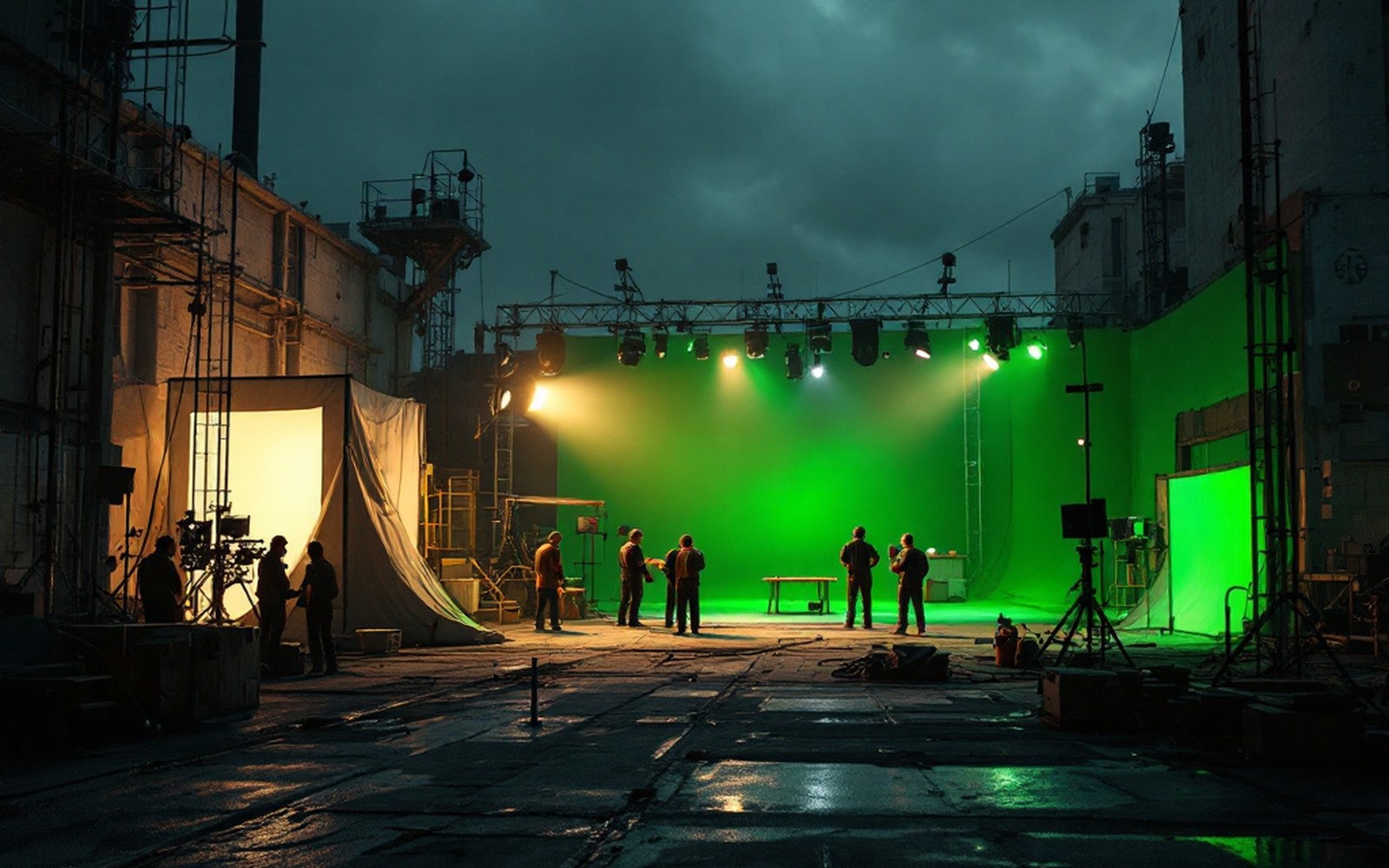
The campaign was directed by Terry Gilliam, known for Monty Python and films such as Brazil (1985) and Twelve Monkeys (1995). His visual instincts ran toward controlled, theatrical light and elaborate production design, which suited a brief that asked for a fictional world rather than a documentary one. The ship's hold was built as a constructed set rather than found location, and the lighting was designed to separate the cage from any identifiable place or time.
Wieden+Kennedy handled the campaign globally. The Secret Tournament was structured not as a single film but as a series of shorter cuts — individual match films, player-specific edits, and the full bracket presented as a competition with a result. This multiplied the campaign's surface area and gave broadcasters and digital platforms material at different lengths. The global cut had to carry the story without relying on dialogue, since it would run across markets with different languages, and the cage's noise — boots on metal, ball on wall, Cantona's occasional laconic interjection — did the work that commentary would normally do.
What the competition structure cost and who paid for it
Nike's position at the 2002 World Cup was that of a major kit supplier — Adidas ↗ held the tournament's official sportswear partnership with FIFA, which meant Adidas could use the World Cup marks and name its campaign as a World Cup campaign. Nike could not. The Secret Tournament was therefore constructed to need no official marks at all. The ship's hold had no FIFA branding. Cantona's white suit carried no tournament insignia. The eight squads wore kits that were recognisably national without being the licensed tournament versions. The entire fiction was sealed from the event it was clearly responding to, and that was the point: the campaign ran during the tournament window, reached the same audience and required none of the rights fees that official partnership demands.
This is the practical logic of ambush marketing in the sponsor-tier structure: a competitor to the official partner can reach the tournament's audience through timing and cultural relevance, as long as it never uses the protected marks. FIFA's category exclusivity rules meant Adidas had the tournament; Nike had the moment. The Secret Tournament was built to own the moment.
The campaign was entered in the Cannes Lions cycle that followed and is consistently cited in retrospectives on football advertising as one of the cleaner solutions to the problem of making a compelling film without a pitch, without a match and without the official name. What it had instead was a set, a structure, a cast of genuine players performing at something close to full intensity, and one retired Frenchman in a white suit who made the whole constructed world feel like it had rules worth following. The cage kept the ball in play. Cantona kept the score. The film ran at a pace ↗ that made it feel like something was at stake, even though everyone watching knew perfectly well that nothing was.