The biggest campaign of the tournament, and its strangest final
Ronaldo Nazário was the face of France 98 before a ball was kicked. What happened in the final made that campaign impossible to forget for different reasons.
The campaign that owned the tournament
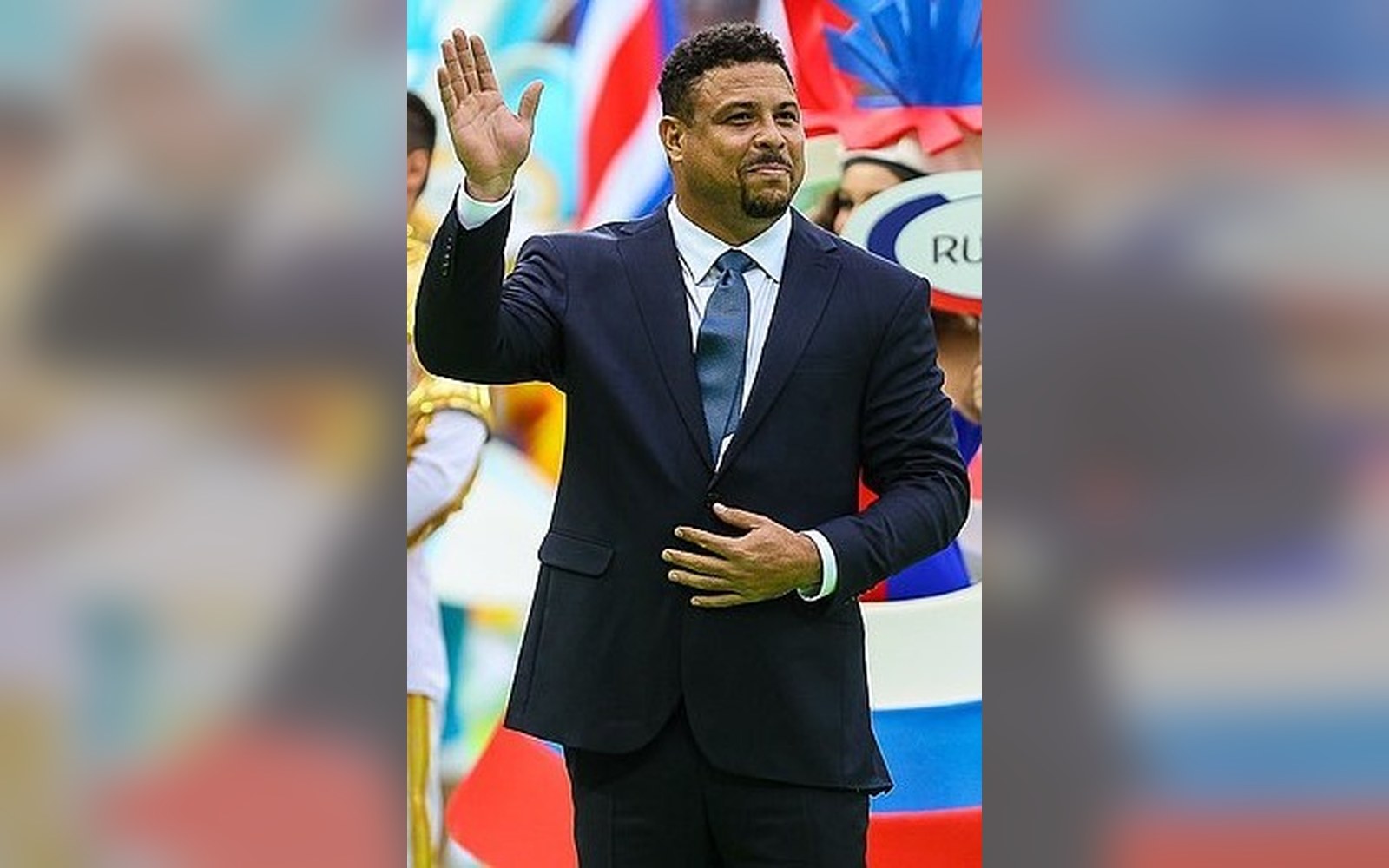
Nike arrived in France with the biggest football advertising footprint the company had ever assembled for a World Cup. Ronaldo Nazário — then twenty-one, the reigning FIFA World Player of the Year, and fresh from a debut season at Barcelona followed by a move to Inter Milan — was its centrepiece. The Nike airport film had already established a template: Brazil's squad, irreverent skill, and the implicit argument that the most exciting football on earth wore the Swoosh. France 98 was meant to be the proof.
The campaign ran across broadcast, print and pitch-side. Ronaldo appeared in the television spots in a way that turned his personal style into product language — the close control, the acceleration, the absolute confidence. Nike had secured him not merely as an endorsee but as a kind of living demonstration that its boots were the instrument of the world's best player. Category exclusivity meant Adidas and Puma could compete on kit deals with national teams, but the individual Ronaldo association was Nike's alone.
Wieden+Kennedy handled creative, as they had for Nike's earlier Brazil campaigns. The films themselves followed a now-familiar structure: skill sequences shot tight, a sense of training-ground reality that stops just short of documentary, and a soundtrack doing work that needed no translation. That last instinct was already commercially deliberate — a film that works with the sound off reaches markets where the original audio never airs. The agency understood this well before anyone framed it as doctrine.
The final
Brazil met France in Saint-Denis on 12 July 1998. France won 3–0. Ronaldo, who had scored four goals and provided assists across the tournament and was widely expected to be the final's decisive figure, had an almost entirely ineffective match. He played the full ninety minutes. France's Zinedine Zidane — himself an Adidas athlete, and decorated by the tournament's poster and advertising in ways that would only be understood retrospectively — scored twice in the first half.
The circumstances surrounding Ronaldo's performance had been disputed ever since. In the hours before kick-off, his name was removed from Brazil's starting lineup by the head coach Mário Zagallo, then reinstated. Contemporary reports from 1998 ↗ documented that Ronaldo had suffered a convulsive episode at the team hotel on the afternoon of the match. The precise nature of that episode, its cause and whether he should have played were debated publicly for years, partly because Ronaldo himself addressed the events in detail only in a memoir published in 2011, and partly because Brazilian football politics added layers to every account.
For Nike, the outcome was a peculiar kind of problem that no advertising budget could address. The campaign had identified Ronaldo with the idea of football at its most electric. The final produced the opposite — a withdrawn, visibly unwell figure who could not impose himself on the game. The films were already made and committed to. The tournament's most promoted individual had turned in the tournament's most unsettling performance, in the most-watched match.
Nike's contract with the Brazilian Football Confederation — which attracted scrutiny in a Brazilian Senate inquiry in 2001 ↗ — was itself investigated for whether commercial obligations had influenced team selection decisions. Nothing was conclusively established. What remained was the image: a player who had been everywhere in the advertising and was effectively absent in the final.
The 1998 campaign did not fail commercially. Ronaldo went on to win the World Cup in 2002 and extend his partnership with Nike into some of the most watched football advertising ever made. But France 98 stands as a reminder that tournament campaigns are built on players, and players are not controllable assets.